From AI Music Experiments to Income-Generating Digital Assets

Music began as a way to unwind after teaching and finishing daily work. There was no studio, production team, or advanced command of multiple instruments—only a bedroom, laptop, internet connection, and curiosity.
The first experiments were far from polished. Some sounded strange, some were deleted, and others were saved for later revision. Repeating that process gradually turned a few drafts into a catalog of dozens of tracks.
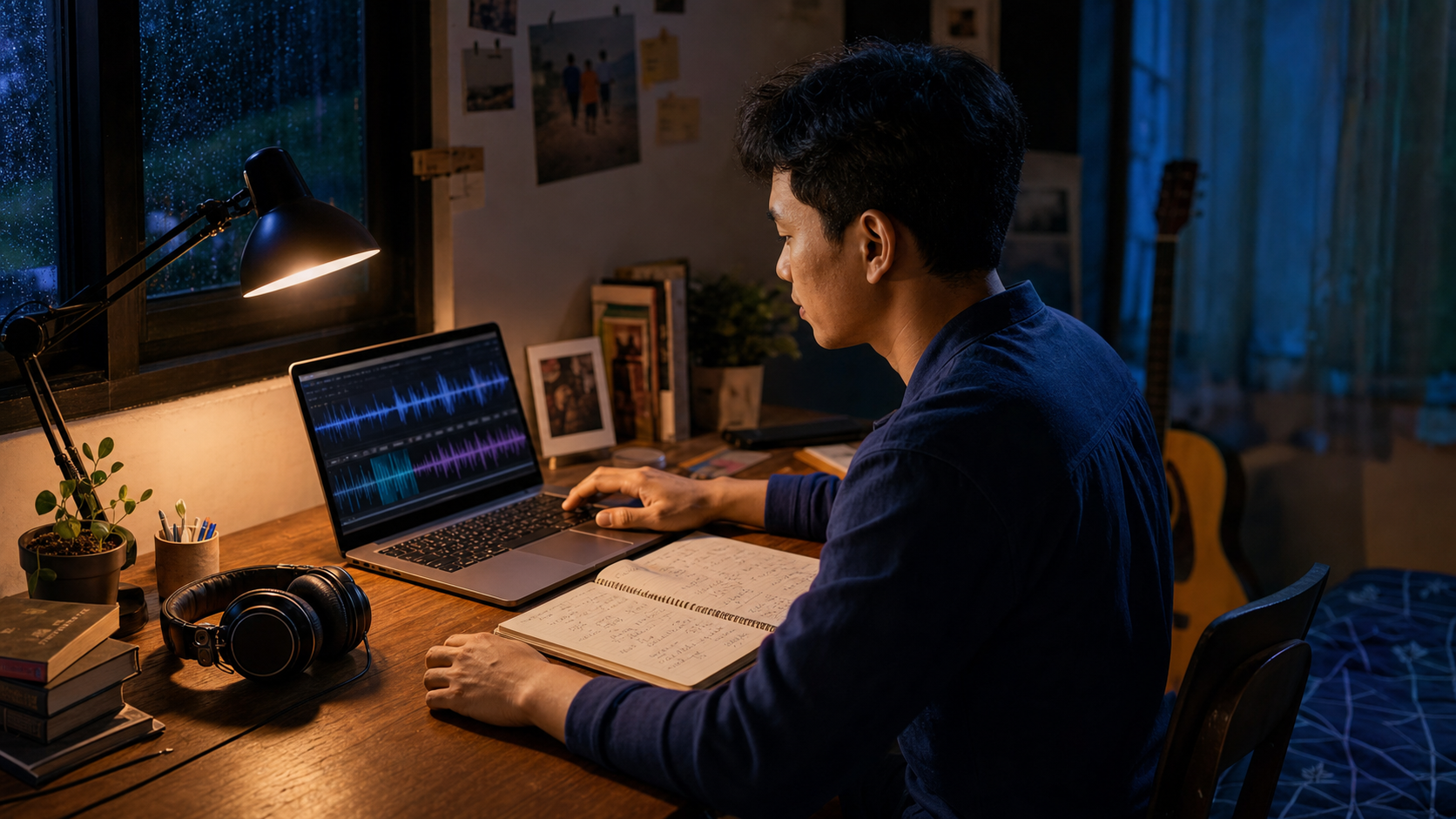
The first result did not arrive quickly
Uploading music did not immediately produce revenue. There were weeks at zero and months when the catalog received little attention. The first payment arrived only after the process had continued for some time.
Its value was symbolic as well as financial: an independently created work could become a digital asset that remained available for plays or licensing.
A catalog matters more than waiting for one viral song
This experience did not depend on a breakout hit. Many tracks earned very little and some earned nothing. Value emerged from a growing catalog with different potential uses.
At the time of the original account, passive digital music income was around US$100 per month. This is a personal result, not a benchmark or guarantee. Others may earn less, more, or nothing.
AI lowers the entry barrier but does not remove the work
AI makes early production more accessible without a studio, but it does not replace taste, review, editing, catalog management, distribution, or licensing knowledge.
Creators still need to improve prompts, compare drafts, select tracks, organize files, prepare metadata, and confirm usage rights.
One work can serve several purposes
Music may support YouTube videos, podcasts, Shorts, Reels, TikTok, indie games, short films, or educational material. It may also enter streaming or suitable licensing channels.
Practical lessons
- Start with available tools and one small target.
- Build a catalog instead of chasing a single viral moment.
- Track prompts, versions, metadata, and distribution channels.
- Evaluate over a realistic period.
- Never present personal income as a promised outcome.
Masri Music at https://music.masri.cloud/member/generator can help create a first draft. This article is an original adaptation of a personal account first published at https://www.masri.id/2026/07/dari-iseng-membuat-lagu-hingga.html. Income is not guaranteed and depends on quality, consistency, distribution, licensing, and market response.

Leave a Comment